Selfie Time Kiosk Server: Electron + Express Edge Backend
Client
Selfie Time (PT Intinya Technology)
My Role
Backend Engineer (2-person refactor team)
Duration
2 months (parallel with kiosk tablet refactor)
Tech Stack
Electron, Node.js (cluster), Express 5, TypeScript, MongoDB + Mongoose, Zod, Winston, Sharp, FFmpeg, remove_bg, electron-updater
Quality
Vitest + Supertest; 500+ tests
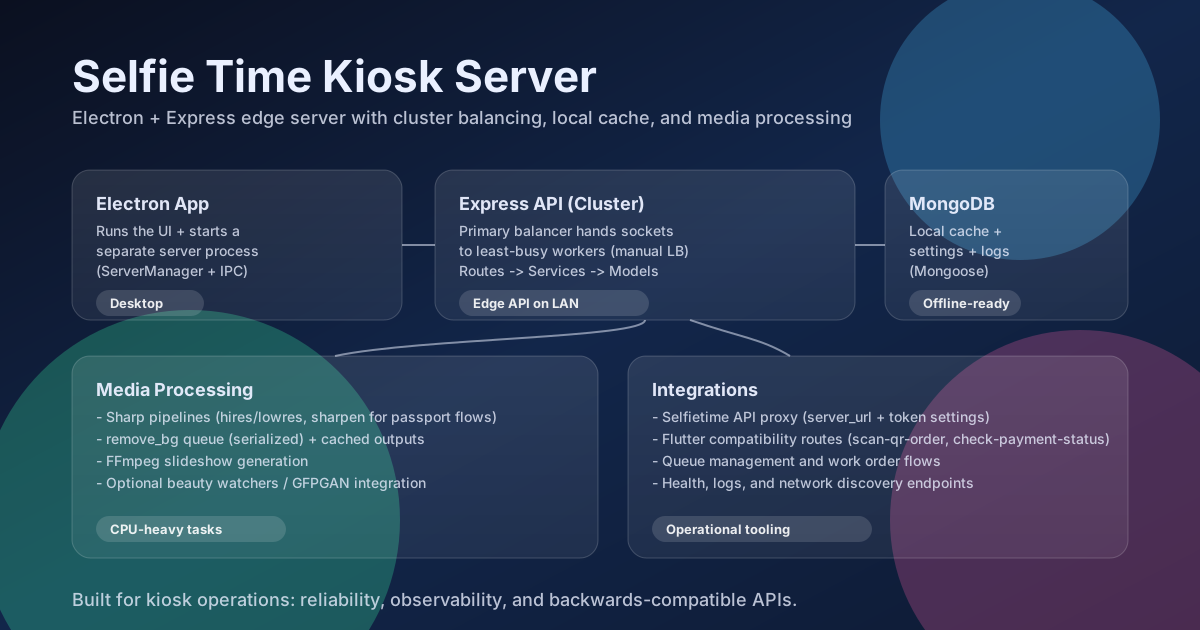
Project Overview & Business Context
This server is the edge backend for Selfie Time kiosks. It runs locally (inside the kiosk environment) and exposes a stable API surface for kiosk clients, while also proxying and syncing with upstream Selfie Time services.
This was a major refactor executed by a 2-person team. The goal was to replace a legacy Meteor-based kiosk server with a clearer, more testable, and more operable Electron + Express implementation, while keeping critical client flows compatible during the transition.
Core Responsibilities
- Act as a local API gateway for kiosk apps on the same LAN.
- Cache critical operational data in MongoDB (settings, users, products, transactions, assets).
- Provide backwards-compatible endpoints used by the Flutter kiosk client (scan, payment, editing flows).
- Handle CPU-heavy media pipelines: image storage, hi-res variants, background removal, slideshow generation.
- Expose operational endpoints for diagnostics: health, logs, network info, cluster status.
Architecture Decisions (Why This Setup)
Clustered Express for Concurrency
Kiosk workloads include bursty traffic (multiple tablets/devices on LAN) and heavy CPU tasks. The server uses Node cluster with a primary-owned TCP balancer that forwards sockets to the least-busy worker (tracked via in-flight counters).
Routes -> Services -> Models
HTTP concerns (validation, status codes) stay in routes; business logic is centralized in services; persistence is in Mongoose models. This makes behavior testable without the HTTP layer and prevents route files turning into spaghetti.
Key Flows (Client -> Edge -> Upstream)
Kiosk Tablet
  -> Local Express API (LAN)
     -> MongoDB cache (settings/products/transactions)
     -> Upstream Selfie Time API (proxy + sync)
     -> Media processing (Sharp/FFmpeg/remove_bg)
Operational Reliability
- Correlation IDs for request tracing across logs.
- Winston + daily rotation for field diagnostics.
- Graceful shutdown of workers and background services.
- Compatibility routing: both root and versioned API bases (e.g., /api and /api/vX).
- Electron ServerManager isolates the server into a separate process to avoid UI instability.
Outcome
- Reduced risk of regressions by moving from Meteor's tightly-coupled runtime to explicit TypeScript APIs with Zod validation.
- Improved outlet operability: built-in health checks, log viewer endpoints, network info, and cluster status for faster troubleshooting.
- Increased throughput and stability on kiosk hardware via clustered workers + least-busy socket balancing for bursty LAN traffic.
- Made heavy image/video workloads safer: serialized rembg jobs, idempotent caching, and background processing to keep UI flows responsive.
- Improved delivery confidence with extensive automated tests (Vitest + Supertest) and a clean service layer that is easier to maintain.